What Happens When a Bullet Hits? Analysis of Ballistic Impact, Armor Penetration, and Blast Effects with FEA
🛡️ What Happens When a Bullet Hits?
Analysis of Ballistic Impact, Armor Penetration, and Blast Effects with FEA
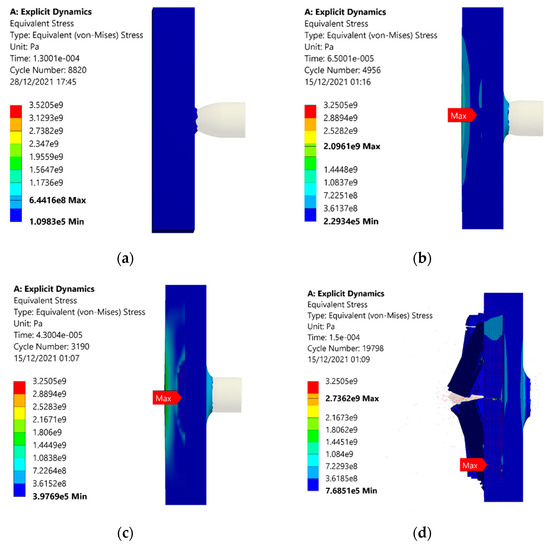
In the defense industry, the performance of any system is not defined only by its design, but by how it behaves under real-world extreme conditions. In this context, ballistic analysis, armor penetration analysis, and blast effect simulation play a critical role in evaluating the reliability and survivability of engineered systems.
Traditional testing methods are costly, time-consuming, and often limited in scope. Therefore, modern engineering increasingly relies on Finite Element Analysis (FEA) and especially explicit dynamics simulation to accurately predict high-speed impact and explosion scenarios.
⚙️ What is Ballistic Analysis? (Ballistic Impact Analysis)
Ballistic analysis is a type of FEA simulation used to study the behavior of high-velocity projectiles such as bullets and shrapnel upon impact with a target surface.
In a typical ballistic impact analysis, engineers evaluate:
- Projectile behavior at the moment of impact
- Energy transfer and distribution
- Plastic deformation of materials
- Fracture and fragmentation mechanisms
- Ricochet or penetration outcomes
Using advanced explicit dynamics analysis, these complex events—occurring within milliseconds—can be simulated with high accuracy.
🧱 Armor Penetration Analysis (Armor Penetration Simulation)
The purpose of armor systems is not merely to resist impact, but to effectively manage and dissipate incoming energy. This makes armor penetration analysis a critical component of defense engineering.
An armor penetration simulation helps determine:
- Whether the projectile penetrates the armor
- The behavior of layered armor systems (composite + metal)
- Back-face deformation and spall effects
- Damage progression within the structure
Advanced techniques used in high-speed impact analysis include:
- Element erosion methods for simulating material failure
- SPH (Smooth Particle Hydrodynamics) for extreme deformation
- ALE (Arbitrary Lagrangian-Eulerian) for fluid-structure interaction
These approaches allow engineers to optimize armor performance in a virtual environment before physical testing.
💥 Blast Effect Analysis (Explosion Simulation)
One of the most critical areas in defense engineering is blast analysis and shock wave simulation. Explosions generate high-pressure waves that can cause severe structural damage within milliseconds.
A typical blast simulation includes:
- Overpressure calculations
- Shock wave propagation
- Dynamic structural response
- Collapse and damage assessment
Using explosion simulation techniques and blast load calculations, engineers can accurately predict how structures behave under explosive loading conditions.
Advanced tools such as explicit FEA solvers enable realistic modeling of blast effects and fluid-structure interaction.
👉 SEO keywords embedded:
blast analysis, explosion simulation, shock wave analysis, blast load calculation, explosion impact analysis
🔬 Advantages of FEA and Explicit Dynamics Simulation
Conventional analysis methods often fail to capture the complexity of high-speed events. This is where Finite Element Analysis (FEA) and explicit dynamics simulation become essential.
Key advantages of FEA-based impact and blast simulations:
✔ High accuracy compared to physical testing
✔ Ability to simulate multiple scenarios rapidly
✔ Reduced testing costs and development time
✔ Early identification of risks and weak points
✔ Design optimization based on data-driven insights
Companies utilizing impact simulation software and ballistic analysis tools gain a significant competitive advantage in product development.
🚀 Defense Simulation Solutions with FE-TECH Advanced Engineering
At FE-TECH Advanced Engineering, we provide high-level simulation solutions for the defense industry, including:
- Ballistic analysis and impact simulations
- Armor penetration and high-velocity impact analysis
- Blast and explosion simulations
With our expertise in LS-DYNA-based explicit dynamics analysis, we help our clients:
👉 Validate designs before physical testing
👉 Analyze critical scenarios with high accuracy
👉 Optimize engineering performance and safety
Predict Before You Test
In defense engineering, success is not left to chance. It depends on the ability to predict how systems will behave under extreme conditions.
Thanks to advanced FEA simulations, including ballistic analysis, armor penetration simulation, and blast effect analysis, it is now possible to:
👉 Understand real-world behavior before testing
👉 Reduce risks and costs
👉 Make data-driven engineering decisions