Heat Transfer Analysis with ANSYS
Numerical Evaluation of Thermal Performance
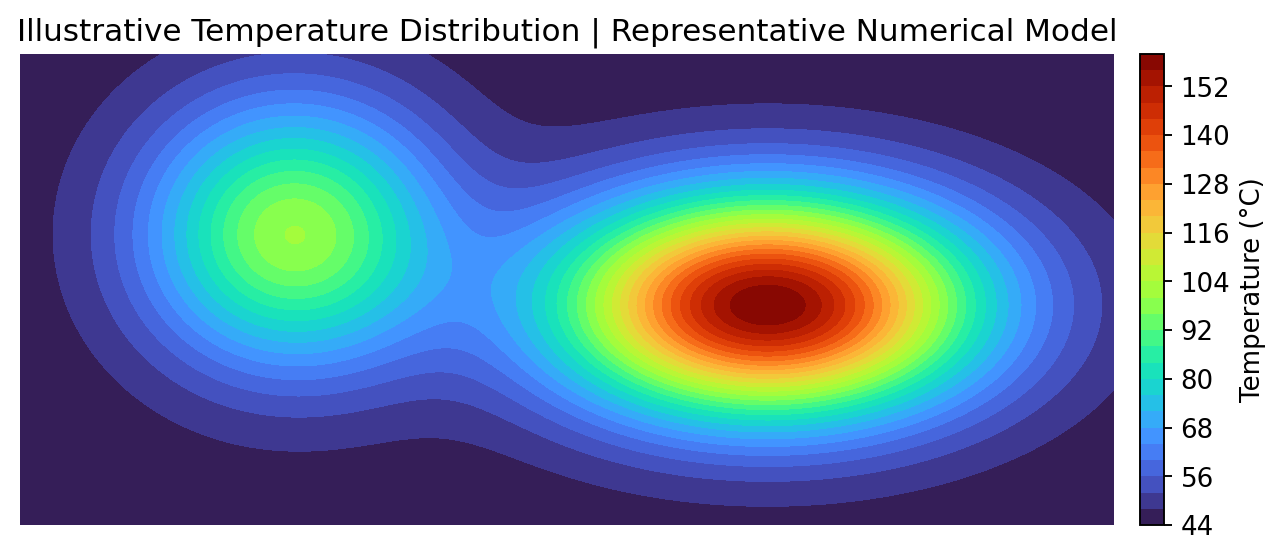
Figure 1. Illustrative temperature distribution. This image is not an output from an actual ANSYS project.
In industrial product design, temperature affects performance, material behavior, and operational reliability. Heat transfer analysis with ANSYS helps engineers numerically evaluate how temperature is distributed within systems, how heat is transferred, and how different operating conditions affect thermal behavior.
What Is Heat Transfer Analysis?
Heat transfer analysis examines energy transfer caused by temperature differences. Its three fundamental mechanisms are conduction, convection, and radiation. These mechanisms may occur simultaneously in real-world systems.
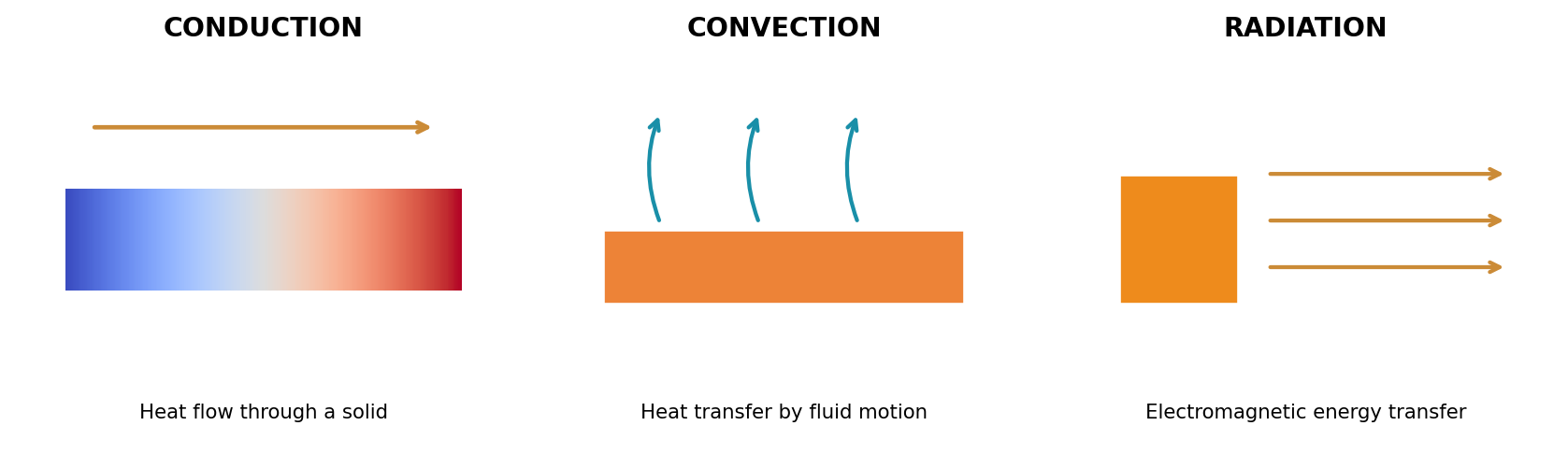
Figure 2. Schematic illustration of the three fundamental heat transfer mechanisms.
What Types of Analysis Can Be Performed with ANSYS?
Steady-State Thermal Analysis
Examines operating conditions in which the temperature distribution does not change over time. Suitable for continuously operating machine housings and equipment.
Transient Thermal Analysis
Calculates how temperature changes over time during heating, cooling, and under varying thermal loads.
Conjugate Heat Transfer (CHT)
Considers conduction in solids and convection in fluids together. ANSYS Fluent can be used for systems such as cooling channels and heat exchangers.
Thermal–Structural Coupling
The calculated temperature field can be transferred to a structural analysis to evaluate temperature-induced expansion, deformation, and stresses.
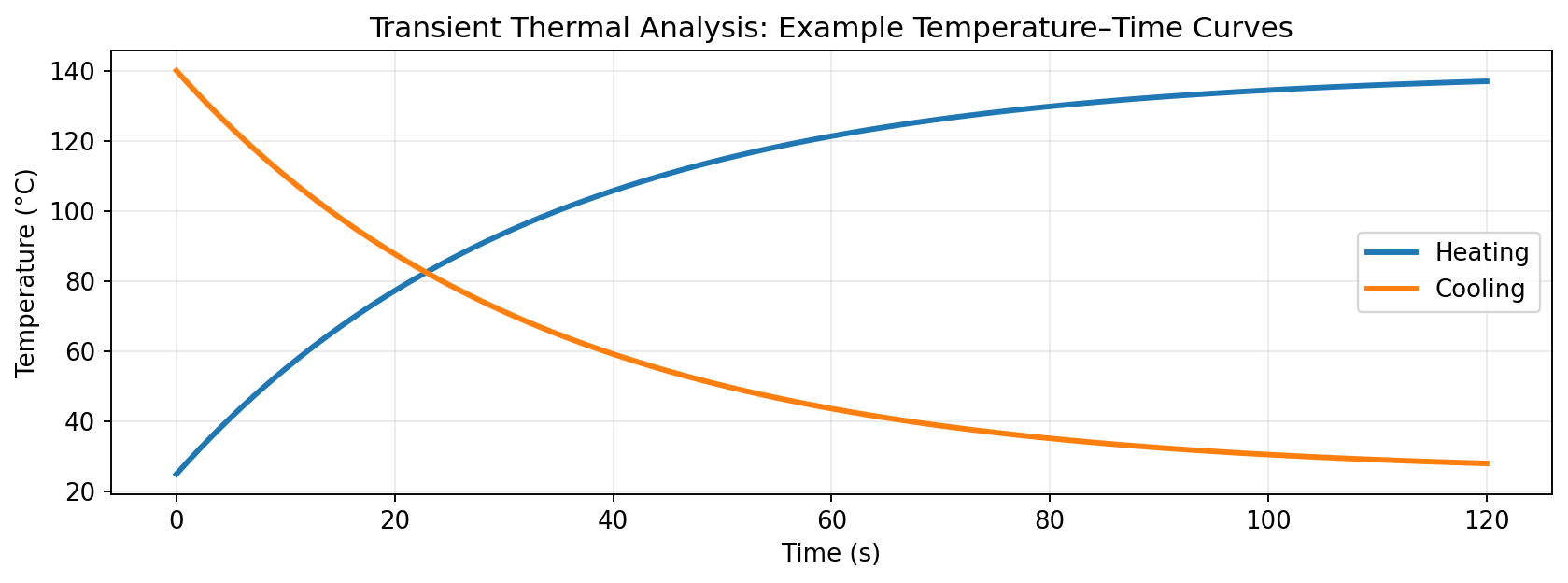
Figure 3. Example heating and cooling curves; synthetic data for illustration only.
Key Parameters Evaluated in the Analysis
| Parameter | Engineering Significance |
| Temperature distribution | Identification of critical temperature regions |
| Heat flux | Heat transferred per unit area (W/m²) |
| Thermal conductivity | Material’s ability to conduct heat (W/m·K) |
| Convection coefficient | Heat transfer between a surface and a fluid (W/m²·K) |
| Thermal contact resistance | Heat transfer across interfaces between assembled components |
| Temperature gradient | Change in temperature with position |
Industrial Applications
Defense and Aerospace
Electronic enclosures, high-temperature components, and thermal protection systems.
Automotive
Brake discs, batteries, engine components, and electronic control units.
Energy and Machinery Manufacturing
Heat exchangers, industrial furnaces, and process equipment.
Electronics
PCBs, power modules, heat sinks, and thermal management systems.
Contribution to Design and Product Development
Thermal analyses enable the comparison of different material, geometry, and cooling alternatives before physical prototyping. Critical temperature regions can be identified at an early stage, and appropriate analysis scenarios can help inform test planning. However, simulation results depend on material data, boundary conditions, mesh quality, and validation; they do not automatically replace physical testing.
Engineering Approach at FE-TECH Advanced Engineering
FE-TECH Advanced Engineering focuses on supporting product development decisions with technical data through numerical simulation and advanced engineering approaches. ANSYS-based thermal analysis methods provide powerful tools for evaluating temperature distribution and thermal risks under realistic operating conditions. Contact FE-TECH to discuss the thermal analysis requirements of your project.